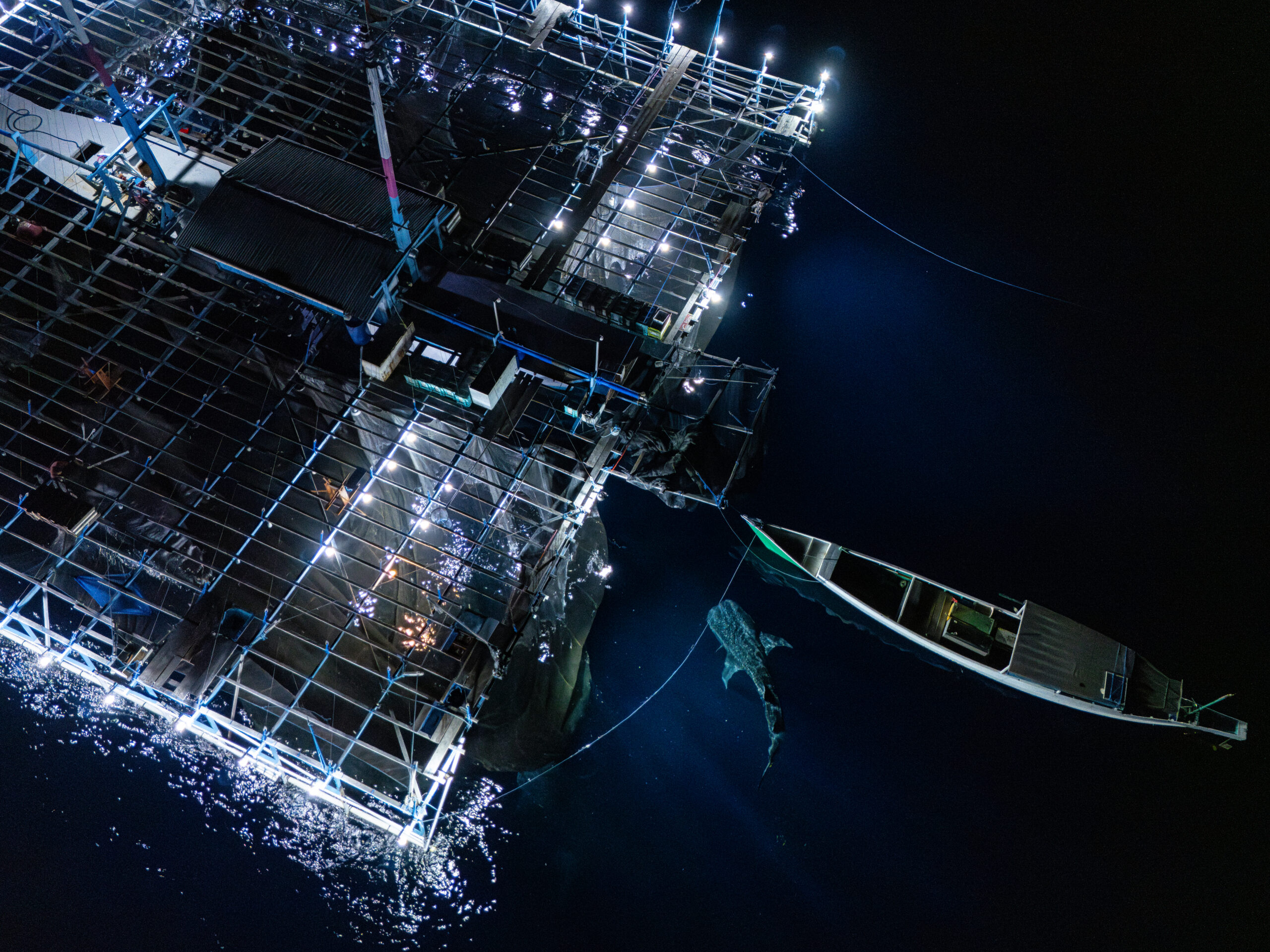
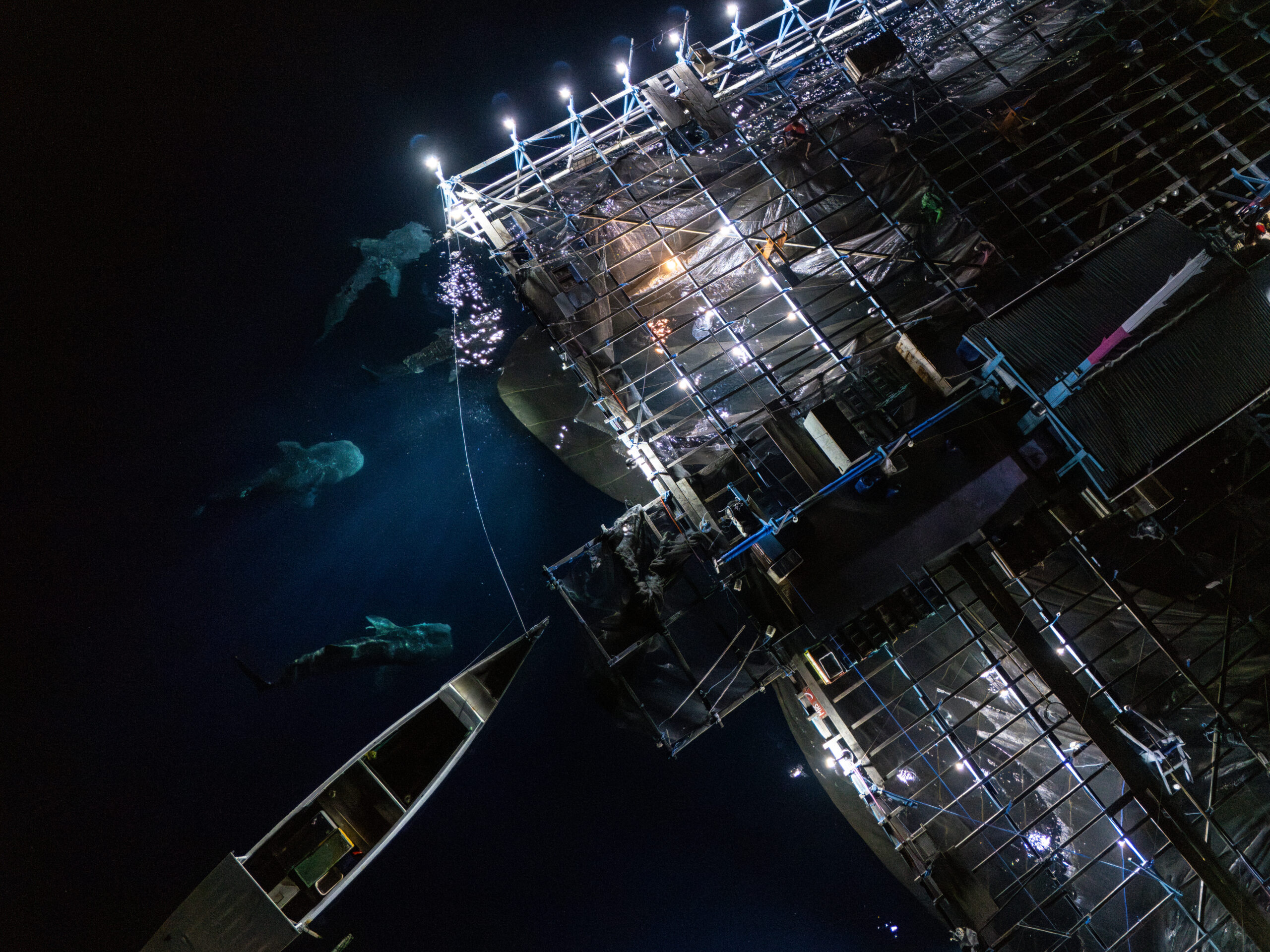
Administrator’s notes: I have had the pleasure of knowing Alex for quite sometime. Besides being a supremely gifted image creator, he’s a good guy! However, since many of you may not know him or his work, I’ll provide a bit of back-story and share some “out-takes” from his award winning encounter with whale sharks. We would like to thank Alex for sharing his images and the story behind them with us.
Since 2010
Alex Lindbloom has lived and worked in Asia; he currently resides in Indonesia. For five years Alex lived and worked full time as an underwater videographer/photographer on a luxury dive boat (aka liveaboard) in Indonesia that rotated seasons between Raja Ampat, Komodo, Alor, and the Banda Sea. After stepping off the boat in 2018, he began working with
Snorkel Venture while also acting as a Field Editor for
Dive Photo Guide.
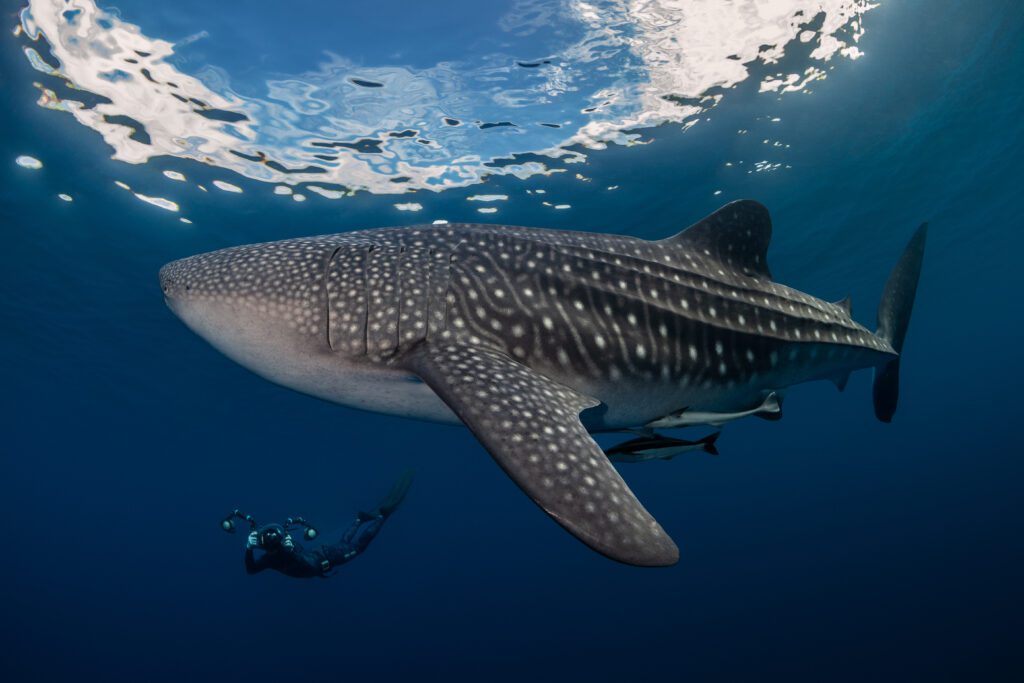
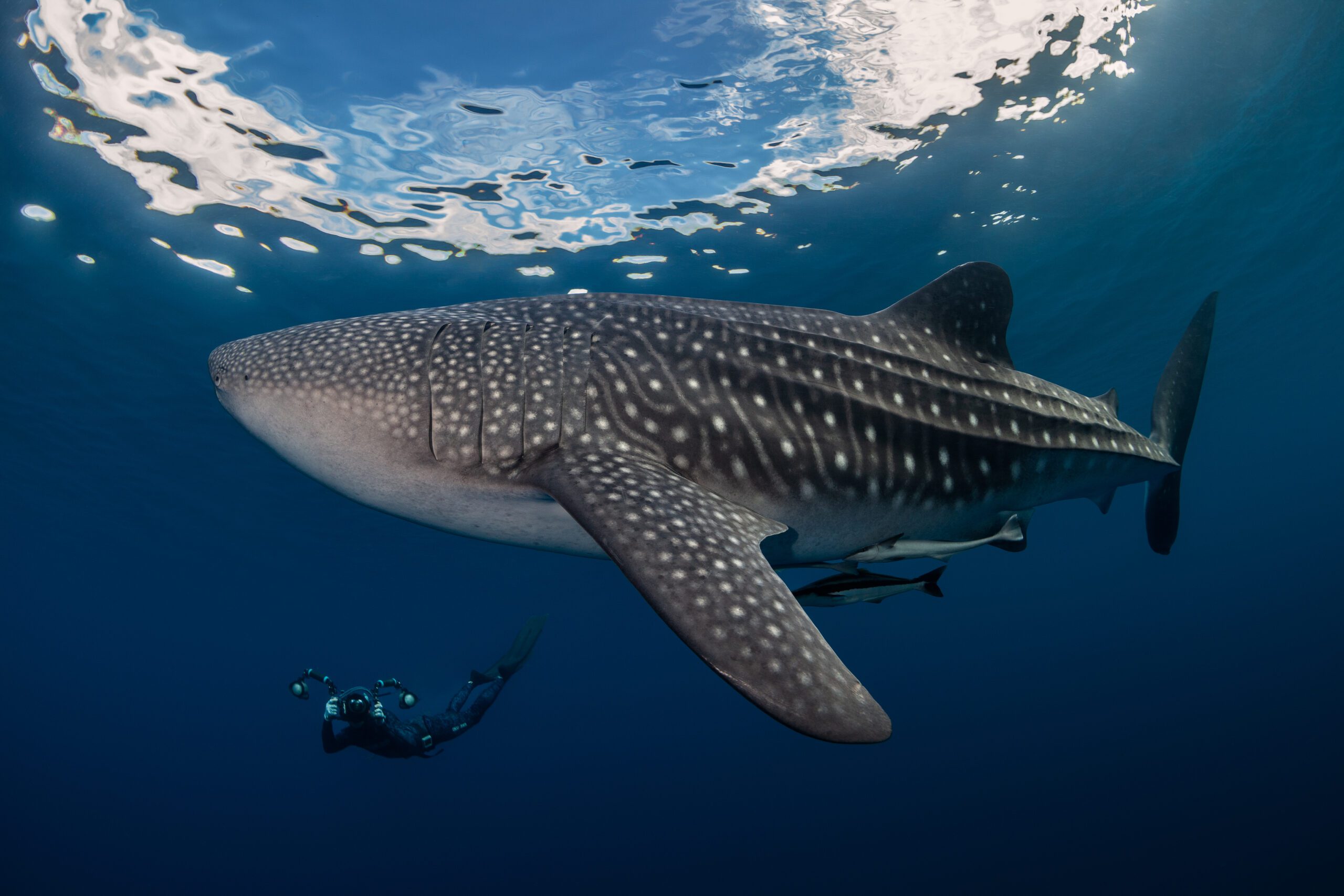
Alex photographing a whale shark. ©Jerry Arriaga – Coralia Liveaboards
He was already an award-winning photographer, when he entered this year’s Wildlife Photographer of the Year (WFY) competition, the world’s most prestigious photo contest staged by London’s Natural History Museum. Surprisingly to Alex, but not to anyone who knows his work, one of his images won! His image of a whale shark approaching a bagan in the Birds Head Seascape’s Cenderawasih Bay won the “Oceans: The Bigger Picture” category.
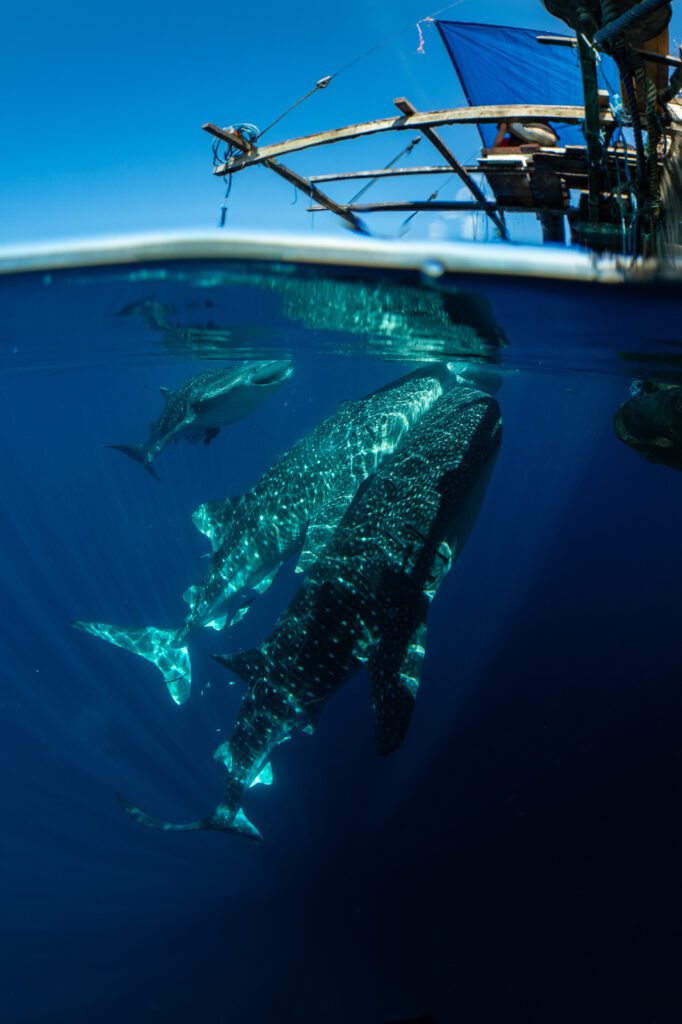
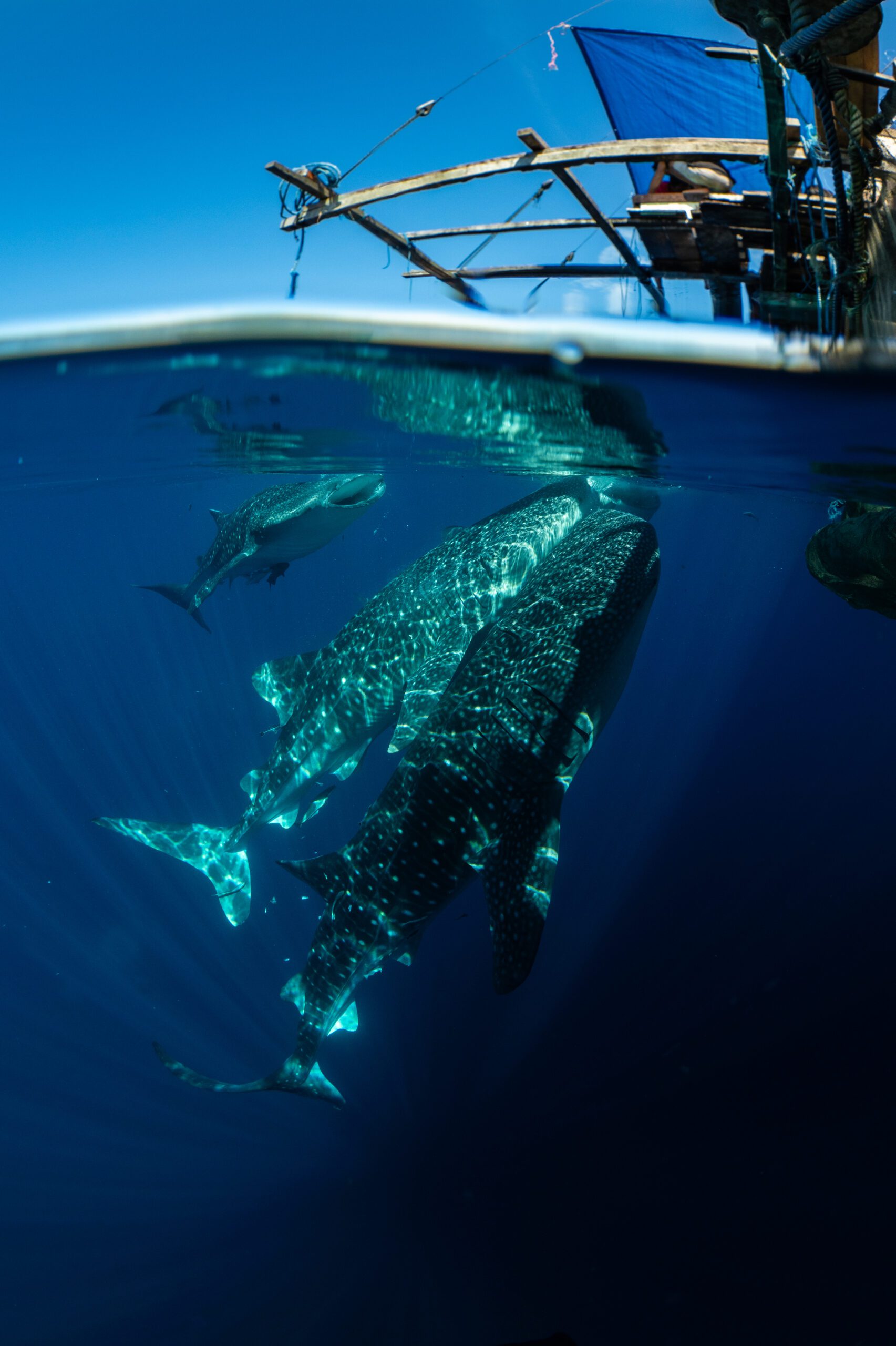
Whale sharks approaching a bagan in Indonesia’s Cenderawasih Bay ©Alex Lindbloom
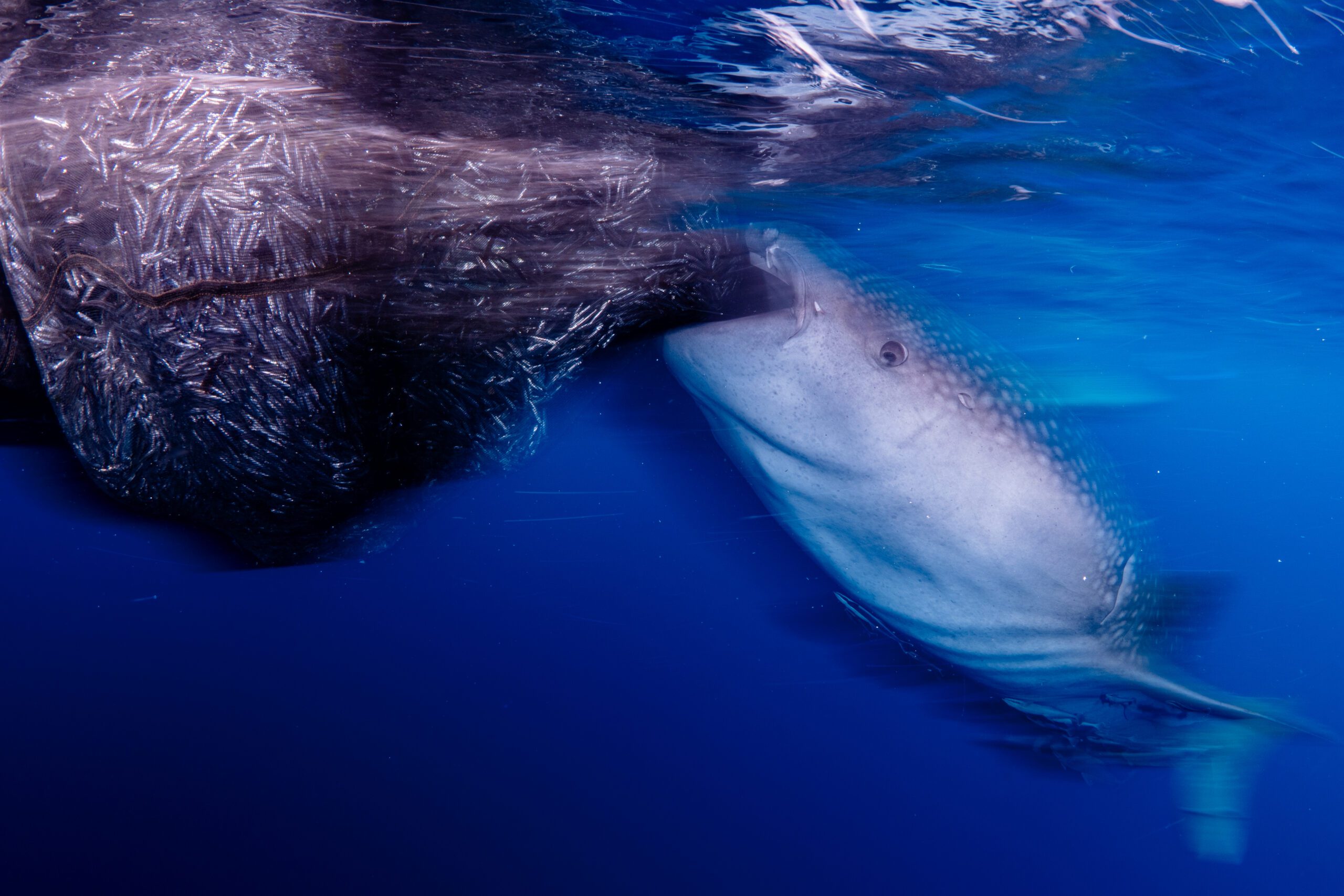
For those of you who don’t know, whale sharks are not whales (mammals) but sharks (fish). In fact they are the biggest fish in the ocean, weighing 15+ tons and 40+ feet in length. They are often termed “gentle giants” due to the fact that they slow moving filter feeders, mostly unconcerned with divers or snorkelers, so easily approachable. But since they are pelagic (free-swimming) they are seldom encountered except in certain locales. In the Birds Head, however, they are frequently found near bagans, floating fishing platforms. The sharks are considered a good omen by local fishermen, who not only tolerate their sieving a part of the catch directly from the net, but actively encourage the shark’s presence by hand-feeding them a portion of their catch . Consequently, areas where the bagans and sharks are found, divers and snorkelers abound. Swimming with animal as large as a bus, yet gentle as a puppy, is an awesome experience and on many divers/snorkelers “bucket-list”.
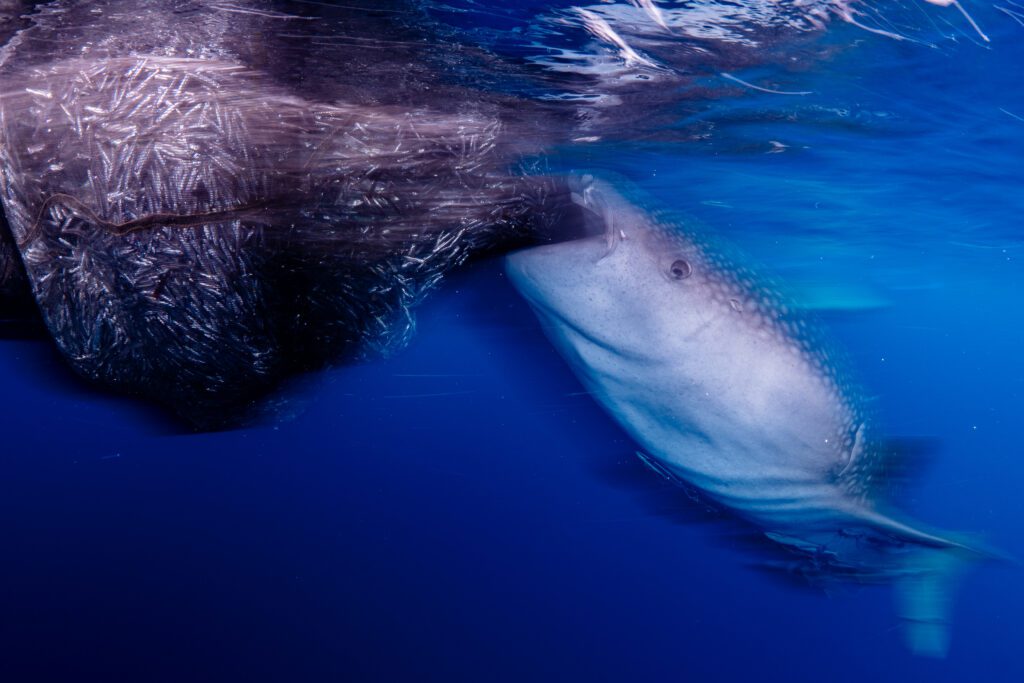
Whale shark sieving bait fish through the net. ©Alex Lindbloom
Action around the bagans, begins early. Overnight the bagan fishermen lower their nets and deploy numerous bright lights, which attract small baitfish by the millions. The night’s catch are retrieved just after sunrise. These fish are in high demand. They are a low cost source of protein for the native population and additionally sold live as bait to tuna fishermen. So divers and snorkelers have to get up early, entering the water shortly after sunrise, while the whale sharks are actively feeding.
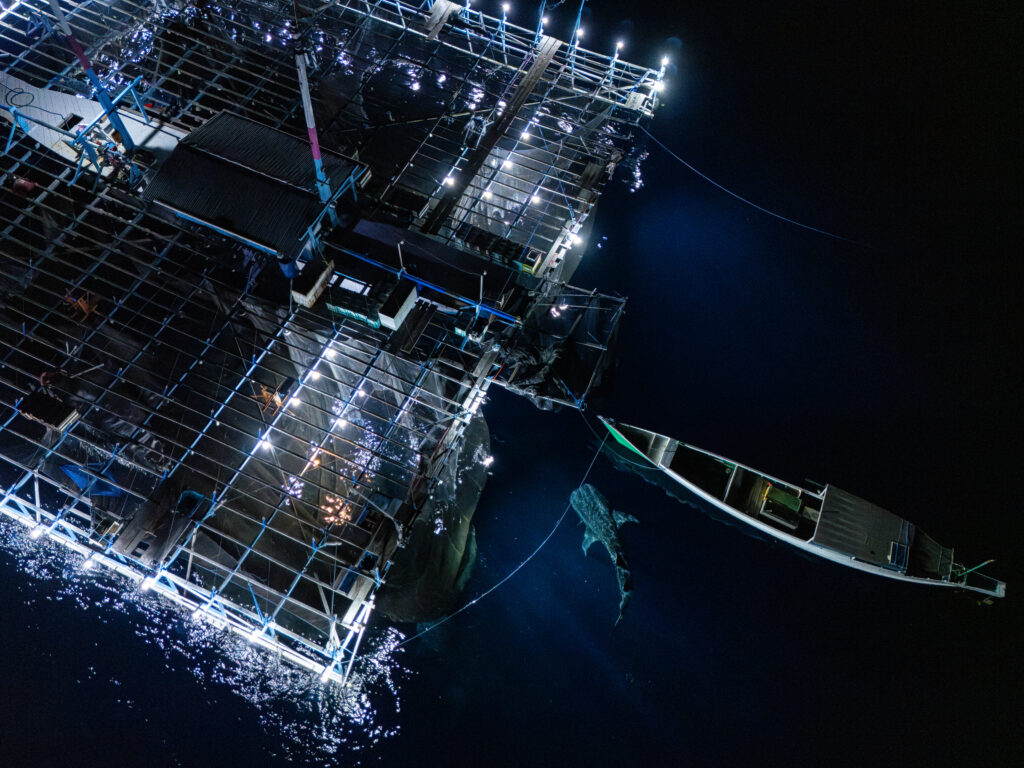
Out-take from Alex’s drone shoot. ©Alex Lindbloom
In 2024, Alex was in Cenderawasih Bay aboard the MV Coralia, one of Indonesia’s most acclaimed liveaboards, with a group of snorkelers from Snorkel Adventure. He captured these drone image just after sunrise before his guests had entered the water.
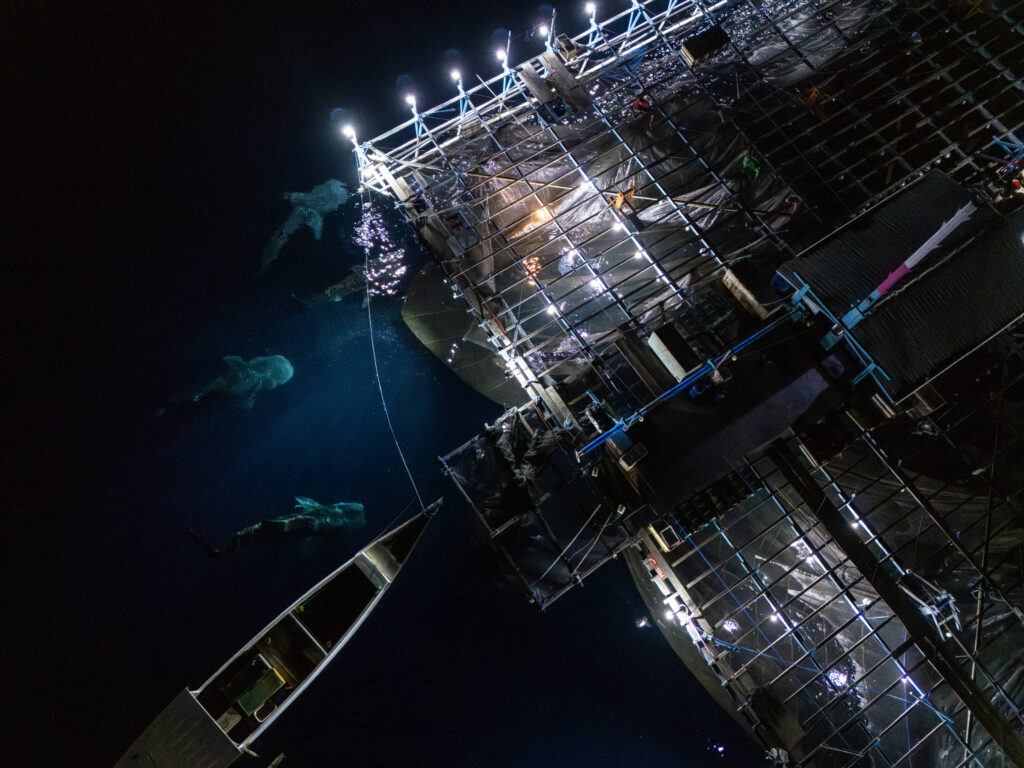
Out-take from Alex’s award winning shoot. ©Alex Lindbloom
And the 2026 Wildlife Photographer of the Year Winner for “Ocean: the Bigger Picture” is: “Night-Time Catch”
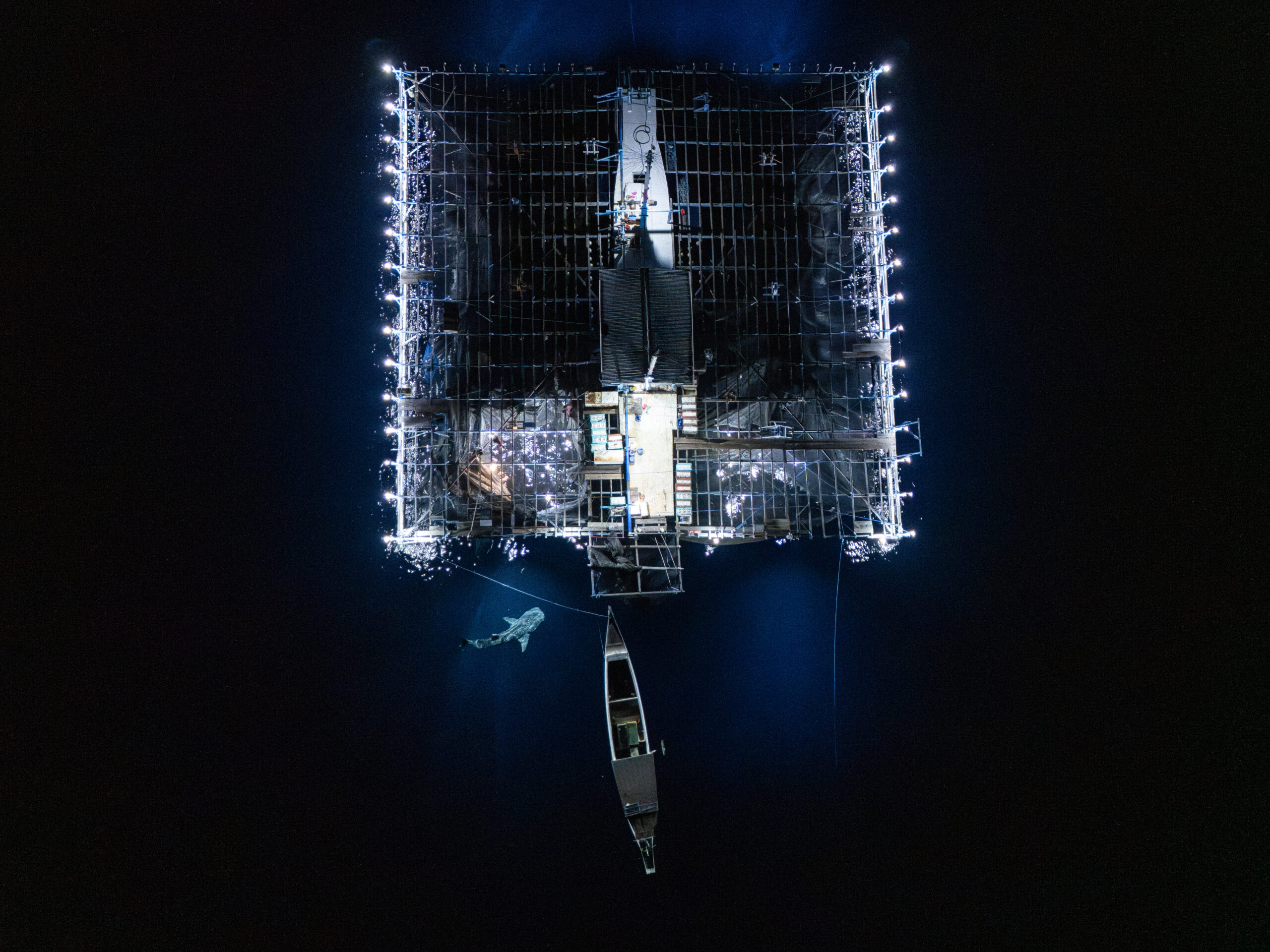
Alex Lindbloom (USA) finds a whale shark investigating the catch of a ‘bagan’, or mobile net-fishing platform, in the inky waters off Papua. ©Alex Lindbloom
Text and image caption from the WFY:
“Alex started searching for sharks around dawn when the nets were still in the water. Initially lacking natural light for his drone’s camera, he found this adolescent whale shark illuminated by the bagan’s bright lights.
Local fishing communities are using the predictable occurrence of whale sharks at bagans to attract tourists. Although contact with bagans can cause some minor injuries to whale sharks, this isn’t a major cause of mortality. The species’ significant decline in the Indo-Pacific region over the past 75 years is primarily driven by ship strikes, entanglements with fishing gear, and illegal fishing.”
Want to see more of Alex’s images? Website: www.alexlindbloom.com or on FB @Alex Lindbloom or Insta @alexlindbloomphoto.
To view Alex’s image as well as all the other category winners click here, WFY 2026 Winners.